MUSCATINE, Iowa–In his 20s, Bob Campagna served as the Director of Public Housing for the City of Muscatine, helping with the creation of the Clark House Apartments and settling in its first group of tenants. As residents signed leases, Campagna took photos of them first for a directory and now for a new exhibit at the Muscatine Art Center, “Faces of Hope: The Original Residents of the Clark House.” Meanwhile on the upper floor of the Stanley Gallery, the almost uncanny realism of Marc Sijan returns in “Marc Sijan: Ultra-Realistic Sculptures.” This pair of realistic exhibits, celebrating the beauty of human life in all its forms, will remain on exhibit through April 9 at the Muscatine Art Center (1314 Mulberry Avenue).
Campagna, who worked as the director of public housing for five years in the 1970s, had decided he would step down from his position after the Clark House opened and had its first group of residents. As a promise to his wife that they would travel more, he had purchased a good quality camera. As he started the process of interviewing and settling tenants, he came up with the idea of creating a photo directory. It would serve as a farewell gift as he stepped down from his position.
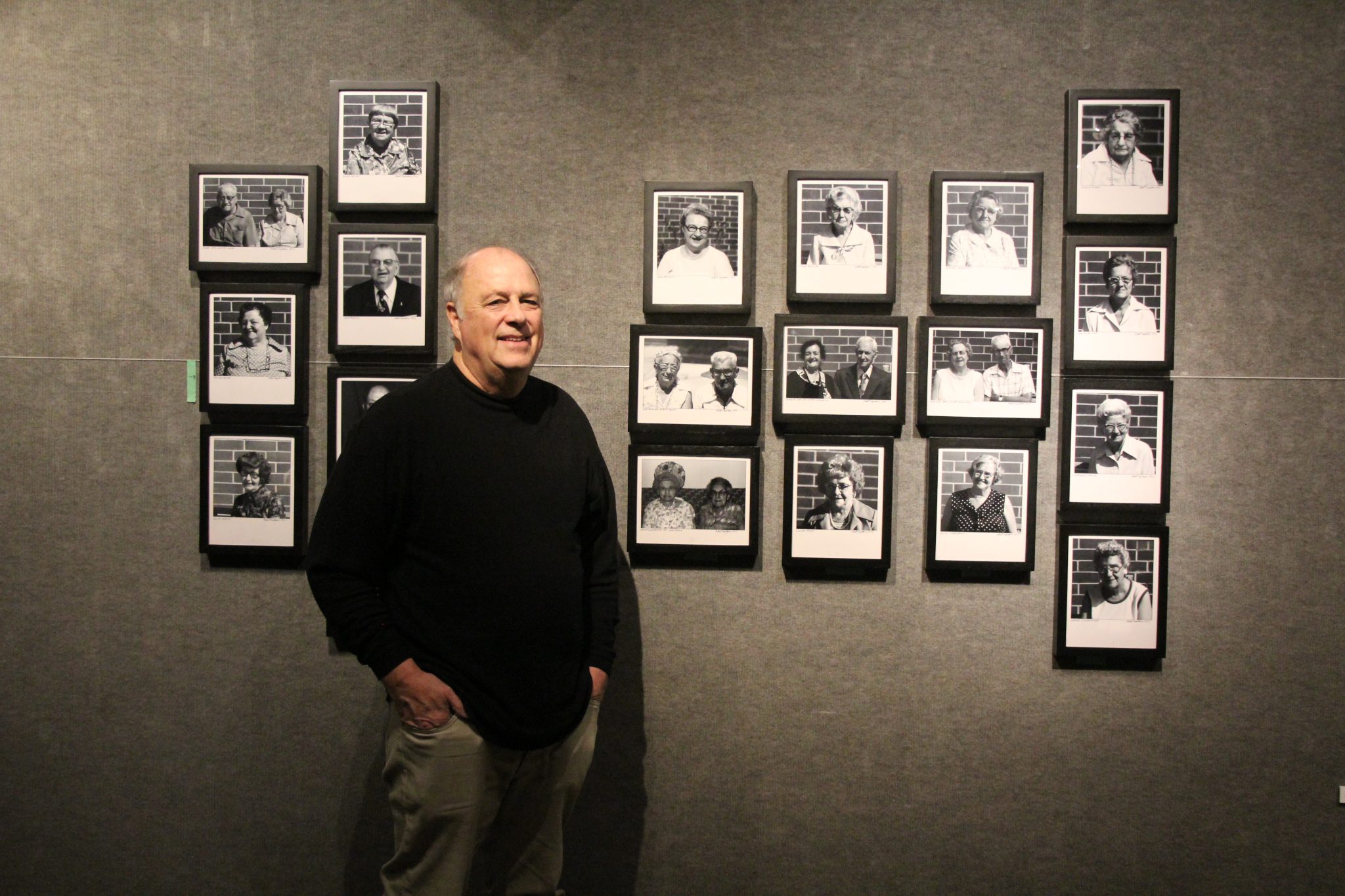
Campagna developed his love of photography over many years and worked as a self-employed photographer. He always saved his negatives, including the ones from the Clark House. Wanting to share this glimpse into the first public housing development in Muscatine, he reached out to Muscatine Art Center Director Melanie Alexander to see about exhibiting.
In his impressive collection of photos (only one resident would neither allow him to take a photo nor provide one) lie many stories, such as those of Lennah and Tony Oostendorp, the official first residents to move in on the Clark House’s first day of operation, and Laura and Clarence Fulton, the actual first residents who moved in slightly before the Clark House’s public opening. “All of these people have come long journeys,” Campagna said. “We had European immigrants, people from farms with multigenerational families, and people from slum landlords.” Along with the photos, a collection of artifacts tells the story of how the Clark House came into existence, its mission to provide safe affordable housing to older adults, and how the historical Alexander Clark duplex moved to its new location several blocks away. Campagna will give a talk on his experiences at 5:30 p.m. March 23 at the Art Center.
Twice before, Sijan has exhibited at the Art Center. A master of creating realistic sculptures of people, Sijan uses his art to study the intricacies of the human body down to the texture and gradation of skin, the nuance of expression, and the proportion and positioning of limbs on people of all ages and statures. In this series of ultra-realistic statues, he explores the lives of people in all walks of life, inviting people to stop, appreciate, and think about the life experiences they could have had. “You don’t know a whole lot about these people, but they make you wonder,” mused Alexander.
In the weeks ahead, she encourages people to come view Sijan’s work and to experience for themselves the surprises of ultra-realistic sculpture. “People are really going to marvel at the effect, because they’re pretty darn real,” she observed.